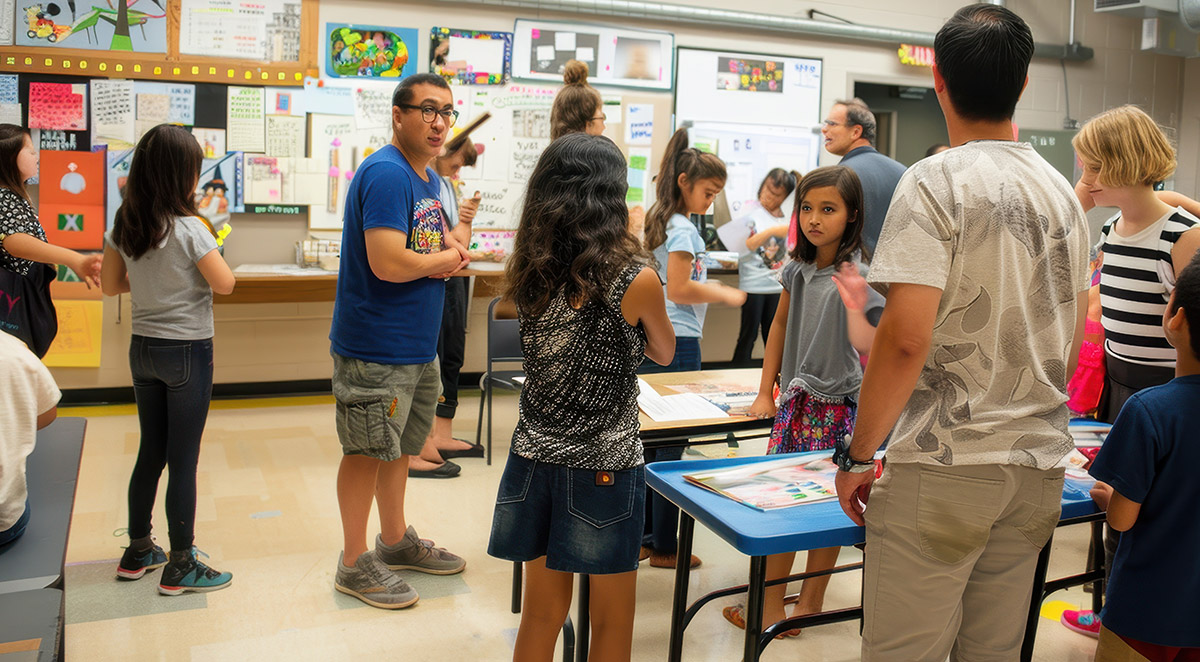
Private school online research, recommendations, and review pages are important, but nothing replaces setting foot on campus and experiencing a school firsthand. The open house visit is where your instincts, observations, and questions come together to form a picture that no website can deliver. A private school open house is your single best opportunity to evaluate whether a school's culture, teaching philosophy, and environment are the right fit for your child.
Quick Summary
- The open house is your most valuable evaluation tool, but most families do not take full advantage of it.
- There are specific things to observe in classrooms, hallways, and student-teacher interactions beyond the polished tour.
- Asking the right questions of admissions staff, educators, and other parents reveals what brochures leave out.
- Red flags and green flags are often subtle, but they tell you everything about a school's true culture.
- Involving your child in the visit provides insight you cannot get any other way.
The Importance of the Open House
Many families begin their school search online, and that makes sense. You can compare programs, read about a school's mission and vision, review tuition structures, and narrow your list before ever scheduling a visit. But the open house is where the research phase ends and the evaluation begins.
A school's website will always put its best foot forward. The open house gives you the chance to see what happens behind the marketing. How do students interact in the hallways? Do teachers seem genuinely engaged? Is the front office welcoming or chaotic? These details shape your child's daily experience, and they only become visible in person.
Your Private School Open House Checklist: What to Observe Beyond the Tour
When you walk through a school during an open house, the physical space will tell you a great deal if you know what to pay attention to. Here is a practical checklist for your private school visit in Orlando.
Classroom Culture and Environment
Step into the classrooms, not just past them. Are students working collaboratively and asking questions, or sitting silently while someone lectures at the front of the room?
Look for these signs of a healthy classroom culture:
- Students are actively participating, not passively absorbing
- Work displayed on walls reflects genuine student effort, not cookie-cutter assignments
- Technology is being used purposefully as a learning tool rather than as a distraction
- Small class sizes allow the teacher to interact individually with students
At schools that emphasize student-centered learning, teachers act more as facilitators than lecturers. They ask questions to spark curiosity rather than simply delivering answers. You can spot this within minutes of observing a classroom.
Student and Teacher Interactions
The relationship between students and teachers is one of the strongest indicators of a school's true culture. Watch whether teachers greet students by name, whether students feel comfortable asking questions, and whether there is mutual respect in conversations. These interactions are very difficult to fake during an open house.
The Physical Environment
The condition of the campus communicates a school's priorities. You do not need a brand-new building to have a great school, but you should see evidence that the space is cared for and intentionally designed. Pay attention to cleanliness and organization, whether learning spaces are designed for collaboration and creativity, safety features such as secure entry points, and access to technology including whether students have individual devices.
Schools that invest in educational architecture and intentional learning spaces understand that the environment plays a role in how students learn.
The Most Revealing Questions to Ask During Your Visit
An open house is not just about observing. It is also about asking the right questions. The answers you get, and sometimes the ones you do not get, will tell you a lot.
Questions for Admissions Staff
- What is the school's educational philosophy, and how does it show up in everyday classroom practice?
- What does the enrollment process look like, and how does the school evaluate student fit?
- How are families kept informed about their child's progress?
- What support systems are in place for students who need additional help or who need more challenge?
- What opportunities exist beyond core academics, such as entrepreneurship programs, dual enrollment, or project-based learning?
You can learn more about how project-based learning develops real-world skills here.
Questions for Teachers
- What does a typical day look like in your classroom?
- How do you differentiate instruction for students at different levels?
- What is the average class size, and how does that impact the way you teach?
Questions for Other Touring Parents
Do not overlook the other families walking through the school alongside you. If current parents are present, ask them what surprised them most about the school after their child enrolled. Comparing notes with other prospective families after the visit can also be incredibly valuable.
Red Flags That Are Easy to Miss
Not everything that looks good on the surface holds up under closer inspection. Here are red flags to watch for during a private school open house.
- Scripted or overly rehearsed presentations. If every answer sounds memorized from a brochure, that can indicate a lack of transparency.
- Reluctance to let you see classrooms in session. A confident school will welcome you into active classrooms, not steer you past closed doors.
- Vague answers to direct questions. When you ask about curriculum, class sizes, or student support and receive only generalities, dig deeper.
- No opportunity to interact with current teachers or students. If the open house is entirely run by marketing staff with no educator presence, that is worth questioning.
- High-pressure enrollment tactics. Any school that pushes you to commit on the spot is prioritizing enrollment numbers over your child's fit.
- A focus on facilities over learning. If the tour spends more time showcasing the building than explaining how students learn, ask what is being left out.
Green Flags That Signal a Healthy School Culture
On the other side, there are green flags that point to a school where your child is likely to thrive.
- Students seem genuinely happy and engaged. Not performatively excited for visitors but authentically comfortable in their environment.
- Staff members speak with specificity. When teachers and administrators give concrete examples of how they teach and support students, it signals depth behind the marketing.
- The school has a clear identity and mission that is visible everywhere. From class structure to programs offered, you can feel the mission in action, not just on a poster.
- There is transparency around tuition, expectations, and enrollment. Schools that communicate openly from the start tend to maintain that openness. For details on tuition, visit the school's tuition and fees page directly.
- Families are welcomed as partners, not just customers. The best schools view parents as collaborators and demonstrate that from the first interaction.
- The curriculum goes beyond textbooks. Look for evidence of project-based learning, hands-on experiences, and real-world application.
How to Involve Your Child in the Visit
Your own impressions matter, but your child's reaction provides insight that no parent checklist can replicate. Whenever possible, bring your child along for the open house or a follow-up campus tour.
Before the Visit
Prepare your child by explaining that you are looking at schools together and that their opinion matters. Ask them to notice whether the classrooms look like places they would want to learn and whether the students seem friendly.
During the Visit
Watch your child closely. Are they curious and engaged, or withdrawn? Children are remarkably perceptive about environments. If the school allows your child to sit in on a class or interact with current students, take advantage of it.
After the Visit
Ask open-ended questions about the experience. Instead of "Did you like it?" try "What was the most interesting thing you saw today?" or "How did it feel to walk around that school?" Their answers may surprise you.
Frequently Asked Questions
How many private school open houses should we attend before making a decision?
Visiting at least two or three schools provides useful comparison points. The goal is to visit enough that you can identify the differences in culture and environment that matter most to your family.
What should we bring to a private school open house?
Bring a notebook or use your phone to jot down observations. A printed checklist of your priorities will help you stay focused.
Can we schedule a private tour if we miss the open house?
Most private schools in Orlando offer individual campus tours by appointment. A private tour can provide a more personalized experience and more time for detailed questions.
Should both parents attend the open house?
Whenever possible, yes. Each parent may notice different things and ask different questions. Comparing perspectives afterward leads to a more complete evaluation.
Take the Next Step
There is no substitute for experiencing a school in person. Walking the hallways, watching students engage with their teachers, and feeling the energy of a campus will tell you more in one visit than weeks of online research.
At Pluris Academy, we welcome families to visit our campus, meet our educators, and see our Garage learning model in action. Our small class sizes, student-centered approach, and K-12 entrepreneurship pathway create an environment where every student is known by name.
Schedule your campus tour today and discover what makes Pluris Academy a different kind of private school in Orlando.